 Otto
OttoApproval First: Stakeholder Updates for Project Managers
Approval First: Stakeholder Updates for Project Managers

The fastest, lowest-risk way to automate stakeholder updates is to assemble reusable content modules from live project data and route every automatically generated draft through a human approval step. This keeps updates consistent and on time while a person still checks tone, accuracy, and sensitive details before anything reaches an external inbox. The result is less manual writing for project managers and fewer surprises for stakeholders who now get information on a predictable schedule.
TL;DR:
- Segregate stakeholders into groups based on what they need and how often, then tailor update frequency and format to prevent generic or ignored reports.
- Build reusable content modules from live project data, allowing for quick assembly of accurate updates tailored to each audience while maintaining consistency.
- Automate data fields like percent complete and milestone dates directly from project tools, but keep narrative sections editable and route drafts through human approval before distribution.
- Use communication channels that stakeholders already check, such as email for summaries, Slack for operational updates, and shared documents for ongoing reviews, with appropriate trigger types.
- Continuously monitor engagement metrics, such as open rates and follow-up questions, and adjust the update schedule or content modules regularly to optimize clarity and usefulness.
Table of Contents
- Map stakeholders and choose the right update cadence
- Build modular templates you can reuse across every audience
- Choose channels and integrations that match how people actually work
- Set up the automation: data, scheduling, and approval in practice
- Track what’s working and adjust the plan over time
- How Otto turns this pattern into a daily habit
- What most teams get wrong about automating updates
- Where to read more on this approach
- Try Otto for automated, approval-first stakeholder updates
- Sources
- FAQ
Map stakeholders and choose the right update cadence
Not every stakeholder needs the same information at the same frequency, and treating them as one audience is the most common reason automated updates feel generic. Start by sorting people into groups based on what decisions they make and how closely they touch daily work.
- Operational stakeholders (team members, coordinators) need frequent, detailed status on tasks and blockers.
- Sponsors need progress against milestones, budget, and risk without task-level noise.
- Executives need a short summary tied to business outcomes.
- External stakeholders (clients, vendors, regulators) need only what affects their contract or deliverables.
PMI guidance on project communication notes that weekly reports are often suitable for operational tasks and team coordination, monthly summaries tend to fit sponsors and upper management, and quarterly updates are commonly used for executive management and stakeholders without a direct role in the work.
Once you know who needs what, build it into a simple reference:
- List each stakeholder group.
- Assign a cadence (weekly, monthly, quarterly).
- Note the preferred format (email digest, chat message, shared doc).
- Flag any stakeholder who needs a variation, such as a client who wants updates only at milestones.
This matrix becomes the rulebook your automation follows, so nobody gets an update they will ignore or misses one they actually need.
Pro Tip: Start with a conservative cadence and tighten it only after you see which updates stakeholders actually open and act on.
Build modular templates you can reuse across every audience

Automation only works if you stop writing each update from scratch. The fix is to break your reporting into modules, small, self-contained blocks of content that can be recombined for different audiences without rewriting anything.
Common modules include:
- Executive summary: one or two sentences on overall health.
- Progress: percent complete, tasks closed, work remaining.
- Milestones: what’s due, what shifted, and why.
- Risks: open issues and their potential impact.
- Decisions: what was decided since the last update and who decided it.
- Asks: what you need from the reader, if anything.
PMI’s approach to modular reporting recommends organizing reports into linked units that pull from live project data, so each report assembles from reusable sections rather than being written fresh every cycle. A central data source removes duplicate entry and keeps every module accurate against a single version of the truth.
For each module, map exactly where its data comes from: percent complete might pull from your task tool, while risk descriptions may need a person to write the nuance a status field cannot capture. Build in manual override fields for anything sensitive, like a risk involving a specific person’s performance, so automation never publishes something that needed a human’s judgment first.
Then set assembly rules:
- Executives receive the summary, milestones, and risks only.
- Sponsors receive summary, progress, milestones, risks, and decisions.
- Operational teams receive everything except the executive summary.
- External stakeholders receive only the modules relevant to their contract.
Choose channels and integrations that match how people actually work
The best channel is the one your stakeholder already checks. Executives tend to skim email digests. Team members often prefer a Slack or Teams message that arrives where they are already working. Sponsors sometimes want a living document they can revisit rather than a message that disappears into an inbox.
- Email works well for periodic, formal summaries with attachments or links.
- Slack or Teams suits fast, frequent operational updates that need quick reactions.
- Shared documents work for sponsors or clients who want a persistent view they can return to anytime.
On the technical side, you have two integration patterns. A live work-graph read pulls current data (tasks, calendar, meeting notes) every time an update generates, which keeps content accurate but depends on your tools staying connected. A periodic snapshot instead captures data at set intervals, which is simpler to set up but can go stale between cycles. A community playbook for AI teammates describes reading the work graph directly as the pattern that avoids the context switching that comes from copying data between tools.
Triggers fall into three types: scheduled (every Friday at 9 AM), milestone-based (fires when a phase closes), and event-based (fires when a risk status changes). Scheduled triggers suit routine cadence, milestone triggers suit sponsors who care about phase transitions, and event triggers suit anything time-sensitive, like a newly flagged risk.
Whatever channel or trigger you choose, external recipients should never receive a message straight from automation. Every draft heading outside your organization needs a person to read it first.
Set up the automation: data, scheduling, and approval in practice
Getting from idea to a working automated update takes a sequence, not a single tool decision. Follow this checklist in order.
- Map your data sources. Identify where percent complete, task status, milestone dates, and risk flags live.
- Assign each field to a module. Quantitative fields (percent complete, milestone dates) can auto-populate; narrative fields (risk context, decisions) usually need a human pass.
- Set your schedule or trigger. Choose scheduled, milestone, or event-based delivery per stakeholder group.
- Build the approval step. Every generated draft routes to a named approver before it sends, no exceptions for external recipients.
- Format for scanning. Keep updates short, use bullets over paragraphs, and lead with a RAG (red, amber, green) status so a reader can tell health at a glance.
- Publish and log. Record who approved the update and when, so you have an audit trail if a stakeholder asks about a past report.
An open-source status report generator illustrates this pattern well: it pulls from project tools, drafts an AI summary, and distributes by email or Slack, but the live values (percent complete, schedule variance) stay separate from editable narrative text so tone and nuance survive the automation step.
Pro Tip: Keep quantitative fields fully automated and narrative fields editable, that split is what keeps a report accurate without sounding robotic.
Before anything goes out, run a short QA pass: confirm the data is current, check whether the RAG status needs a manual override, verify owners and dates are correct, and make sure no confidential detail slipped into a module meant for a broader audience.
Track what’s working and adjust the plan over time
Automation is not a one-time setup. Watch a handful of metrics: open or read rates, how many follow-up questions an update generates, how quickly a stakeholder decision gets made after they receive it, and how much manual time you’ve saved compared to writing updates by hand.
- Read rates show whether stakeholders are actually opening what you send.
- Follow-up questions signal whether a module is unclear or missing context.
- Time-to-decision shows whether sponsors act faster once given a clean summary.
- Time saved is the number that justifies the setup effort to your own leadership.
A RAG status gives stakeholders a fast way to scan health without reading every line, but any red status should require a manual confirmation before it goes to anyone outside the immediate team. PMI’s guidance on communication strategy treats the communication plan as something to review regularly, closing the gap between where stakeholder attitudes are and where you want them to be, rather than a document you write once and forget.
Automation paired with a measurement plan lets you show the actual return on the time invested, tracking engagement and hours saved rather than assuming the setup is working. Ask stakeholders directly, every quarter or so, whether the cadence and format still fit, and adjust the modules or schedule based on what they tell you.
How Otto turns this pattern into a daily habit
Otto is built as an AI chief of staff that holds email, calendar, meetings, and commitments in one shared memory, which matters here because a stakeholder update is only as good as the context behind it. A typical workflow looks like this:
- Otto listens in meetings and reads email to capture promises and decisions as they happen.
- It assembles those captured items into the relevant report modules automatically.
- It drafts the update using your existing structure and audience rules.
- The draft routes to you for approval before anything sends.
- Once approved, the update publishes to the channel and stakeholder you specified.
Nothing is ever sent or finalized without explicit approval. Otto drafts, you decide, which keeps the same human checkpoint this article recommends at every other stage of the process.
What most teams get wrong about automating updates
The most common mistakes are picking too many cadences to maintain, skipping the approval step to save time, and writing one update for every audience instead of tailoring the modules. If you try one thing this week, build a single executive summary module and automate its draft for your own approval before it reaches anyone else. Measure whether it saves you time before you expand further.
— Eddie
Where to read more on this approach
For deeper reading, see PMI’s guidance on modular reporting, its communication strategy framework, and practical automation examples from Ampwise AI and PROJECT-JTH.
Try Otto for automated, approval-first stakeholder updates
If you’ve read this far, you already know the hard part of automating updates isn’t the sending, it’s keeping context accurate across email, meetings, and a dozen half-connected tools. Otto solves that by holding your commitments, calendar, and inbox in one memory, so the update it drafts already reflects what you promised on a call last week without you copying it over by hand.
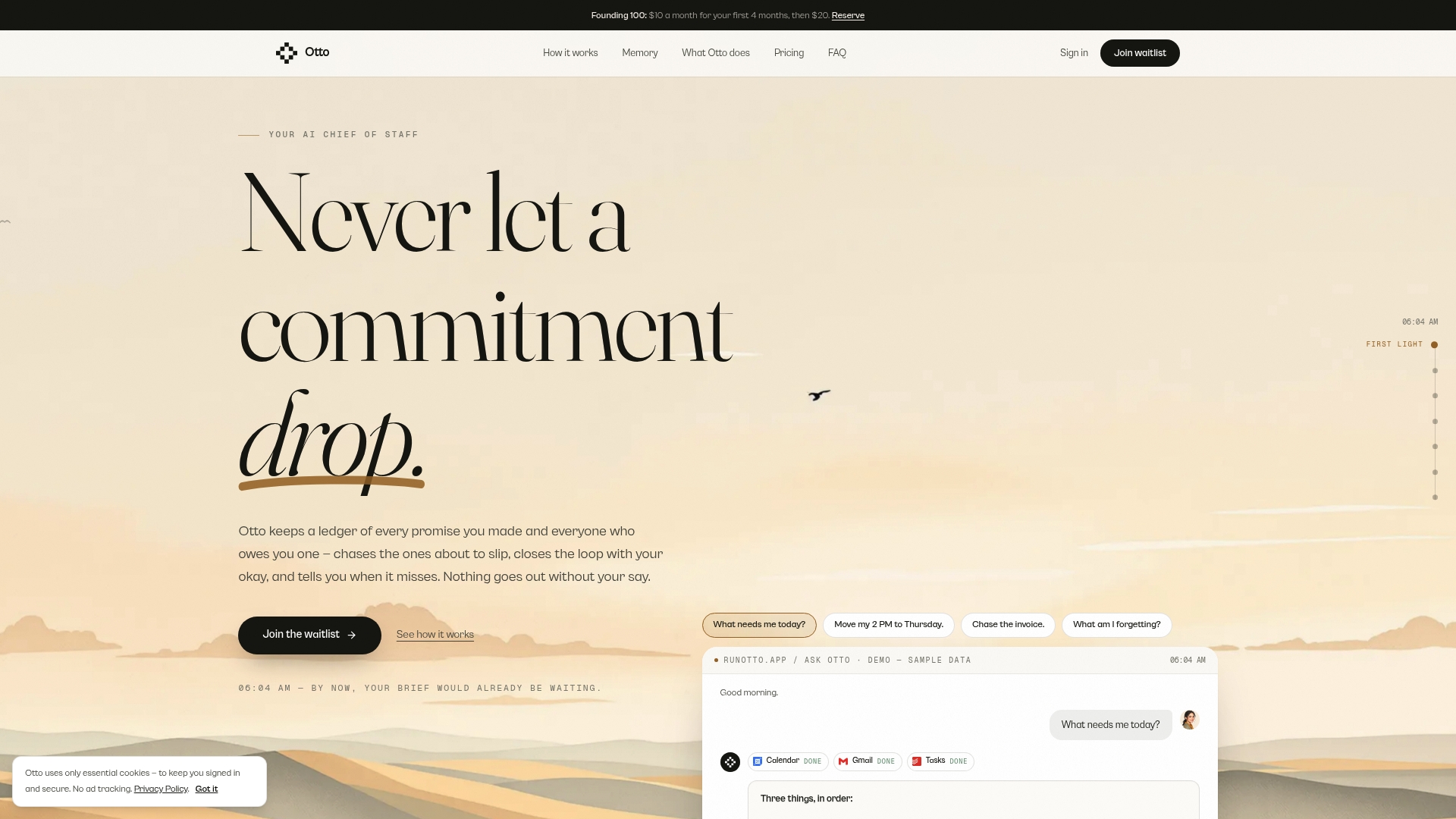
That fits directly into the workflow this article describes: modular content, audience-specific delivery, and a draft that waits for your approval before it goes anywhere. Otto offers multiple plans including a free option and paid plans with additional features; current pricing details are available at Ottohq. Start on the Free plan and see how it handles your next stakeholder update.
Sources
- Project communication–foundation for project success
- Agents Playbook #4 - This Is How AI Teammates Create the Best Executive Briefs
- Automated project status report generator (GitHub)
FAQ
What are the 7 C’s of stakeholder management?
Definitions vary across sources, and this article does not cover a specific “7 C’s” framework. The foundation for stakeholder communication is matching frequency and format to audience needs, as described in PMI’s communication guidance.
What is the best tool for stakeholder mapping?
There’s no single best tool, since stakeholder mapping depends more on the process than the software. A simple matrix that lists each stakeholder group, their cadence, and their preferred format, built in a spreadsheet or shared doc, works as a starting point before adding automation.
What are the 3 P’s to engage stakeholders effectively?
This framework isn’t covered by the sources behind this article, so a canonical answer would be a guess. The engagement principles that do hold up are matching content to audience, keeping cadence consistent, and reviewing the plan regularly, as outlined in PMI’s communication strategy resource.
What are the four C’s of stakeholder management?
This specific framework isn’t addressed in the sources this article draws on. What is well supported is that communication plans should be reviewed regularly and adjusted based on stakeholder feedback, per PMI guidance.
How do I automate stakeholder updates without losing accuracy?
Pull quantitative fields like percent complete and milestone dates directly from live project data, and keep narrative sections like risk context editable by a person. Always route the finished draft through a human approval step before it reaches anyone outside your immediate team.