 Otto
OttoGmail Task Management: Three Step Inbox Workflow Syncs to Calendar
Gmail Task Management: Three Step Inbox Workflow Syncs to Calendar

Gmail’s task management runs on Google Tasks, built directly into the inbox, so you can turn any email into a to-do in one click and see it show up on your Google Calendar automatically. Open the panel by clicking the Tasks icon on the right side of Gmail, or click More on an open email and select Add to Tasks. From there, everything syncs across your devices without extra setup.
TL;DR:
- Google Tasks allows quick email-to-task conversion through a simple panel, drag-and-drop, and retails a direct link to the original message for context.
- Tasks can be organized into multiple lists with preset naming conventions like Today, Waiting For, and Someday, but lack built-in priority flags or multi-level subtasks.
- Tasks with due dates appear automatically on Google Calendar as all-day items, accessible across desktop, mobile, and within other Google apps when signed into the same account.
- Native collaboration is limited to Google Chat Spaces and Docs, with most teams supplementing Tasks with shared documents, chat spaces, or third-party tools for visibility.
- Automations via Zapier and IFTTT can streamline recurring task creation, but require careful setup to prevent overwhelming lists with unintended triggers.
Table of Contents
- How to Open the Tasks Panel and Turn an Email Into a Task
- Organizing Gmail Tasks: Lists, Subtasks, and Naming That Actually Sticks
- How Do Gmail Tasks Sync With Google Calendar and Across Devices?
- Assigning and Collaborating on Tasks Inside Google Workspace
- Advanced Gmail Task Workflows: Daily Routines That Actually Hold Up
- Where Google Tasks Falls Short and What to Add Instead
- How Otto Complements a Gmail and Google Tasks Workflow
- Connecting Gmail Tasks to Zapier, IFTTT, and Other Automation Tools
- Keyboard Shortcuts That Speed Up Gmail Task Management
- The One Habit Worth Building First
- Try Otto for Commitments That Live Beyond a Single Inbox
- Sources
- FAQ
How to Open the Tasks Panel and Turn an Email Into a Task
Gmail keeps Google Tasks in the vertical strip on the right edge of the screen, alongside Calendar, Keep, and Contacts. If you don’t see it, click the small arrow at the bottom right of the Gmail window to expand the panel, then click the checkmark icon labeled Tasks. You can pin it open so it stays visible while you work through your inbox, which matters if you’re processing dozens of emails a day and don’t want to keep reopening it.
Two capture methods handle almost every situation:
- Open the email, then add it. Open the message, click the three-dot More menu, and select Add to Tasks. Gmail creates a new task using the email’s subject line as the task title, with a link back to the original message attached automatically.
- Drag and drop. With the Tasks panel open, grab the email from your inbox list and drag it directly onto the Tasks sidebar. This works faster once you’ve built the habit, and it produces the same result: a task linked to the source email.
Once the task exists, click into it to add notes, set a due date and time, or break it into subtasks. This linked-task behavior is one of Gmail’s more useful quirks. You never lose the thread back to the original request, even weeks later, because Google’s own instructions confirm the task retains that reference automatically.
If the Tasks icon is missing entirely, the fix is usually simple: pin Tasks to the side panel through the settings gear, check whether a browser extension is hiding the sidebar, or confirm your Workspace admin hasn’t restricted the app, according to troubleshooting guidance from TasksBoard.
Pro Tip: Add tasks first, archive the email second. If you archive before capturing, you’ll lose the one-click link back to the message and have to search for it later.
Organizing Gmail Tasks: Lists, Subtasks, and Naming That Actually Sticks
Google Tasks lets you run multiple separate lists, and switching between them takes one click from the dropdown at the top of the panel. You might keep a “Work” list for job-related items and a “Personal” list for everything else, or split further based on how your week actually runs.
Renaming a list, deleting it, or moving a task between lists takes seconds. Documentation on Google Tasks confirms the system supports one level of subtasks. You can break “Renew business license” into two or three smaller steps without cluttering your main list with separate top-level items.
A few list-naming patterns hold up well over months of actual use:
- Today — anything you’re committed to finishing before you close your laptop.
- Waiting For — tasks that depend on someone else replying, approving, or delivering something first.
- Finance — recurring bills, invoices, and anything tied to money that shouldn’t get buried in a general list.
- Someday — ideas and low-priority items you don’t want to lose but don’t need to see daily.
For priority, Google Tasks doesn’t offer flags or color tags. Instead, you simulate priority through manual drag-and-drop reordering and due dates. Put your three most important items at the top of Today and let the rest sit below the fold. It’s a blunt system, but it’s fast, and fast wins when you’re triaging fifty emails before 9 AM.
Pro Tip: Keep “Waiting For” ruthlessly current. Review it every Friday and either follow up or delete the task if it’s no longer relevant. A stale Waiting For list becomes noise you learn to ignore, which defeats the point.
How Do Gmail Tasks Sync With Google Calendar and Across Devices?
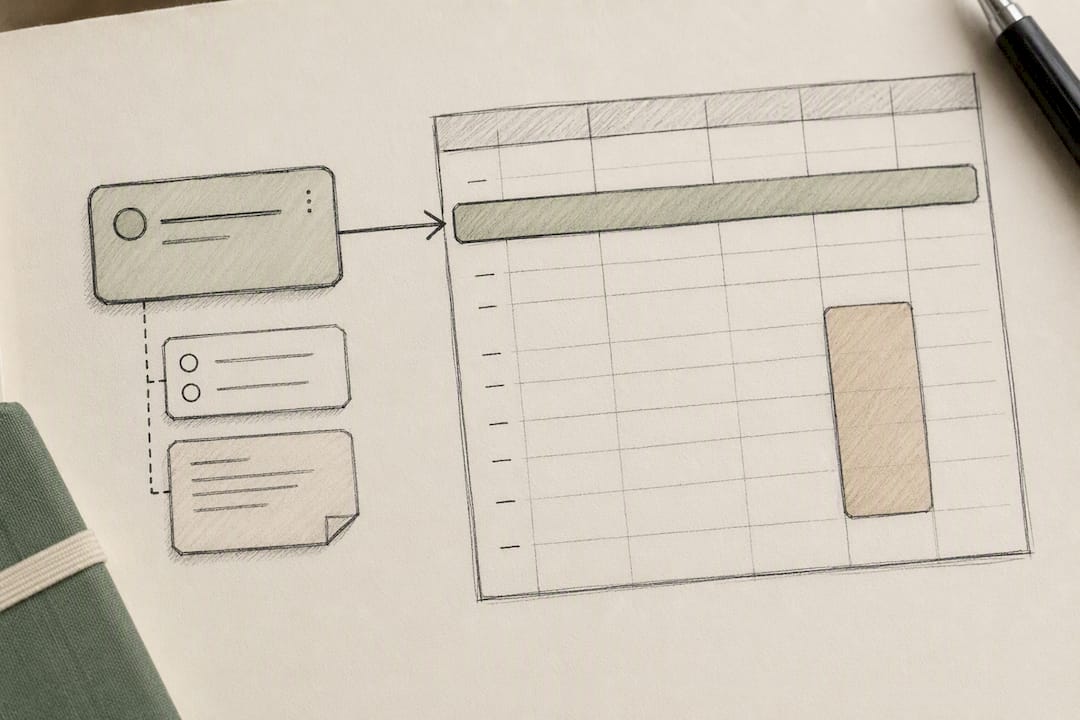
Any task with a due date automatically appears on Google Calendar as an all-day item, and it updates the moment you edit the due date in Tasks. There’s no separate sync button, no export step. It just happens, based on documentation from NC State’s Google Tasks overview.
Sync also extends across every place Google Tasks lives:
- The Gmail sidebar on desktop
- tasks.google.com directly, if you want a full-screen view without email distractions
- The Google Tasks mobile app on iOS and Android
- The Tasks panel inside Calendar, Chat, Drive, Docs, Sheets, and Slides
All of it stays consistent as long as you’re signed into the same Google account everywhere. That’s the part people miss when tasks “disappear”: they created the task under a work account on desktop, then checked a personal account on their phone and found nothing there.
One distinction worth remembering: Calendar shows you when something’s due, but it won’t show subtasks or notes. Tasks on Google Calendar appear as all-day items rather than timed events, which is a deliberate design choice. Google treats tasks as things to accomplish sometime during the day, not scheduled blocks with a start and end time. If you want a phone notification at a specific hour, you’ll need to set that reminder inside the mobile Tasks app itself, since Calendar’s all-day format doesn’t trigger the same alert behavior as a timed meeting.
Assigning and Collaborating on Tasks Inside Google Workspace
Native Google Tasks was built for individual use first, and collaboration features layer on top of that foundation rather than replacing it. Two places inside Workspace do support real assignment:
- Google Chat Spaces. Inside a Space, you can create a group task and assign it to a specific member, and everyone in that Space sees the assignment and its status. This works well for small teams already coordinating through Chat.
- Google Docs. If you’re signed into an eligible Workspace account, you can highlight a comment or action item in a doc and assign it to yourself or a collaborator directly, according to Google’s support documentation.
Outside of those two contexts, Google Tasks sharing is thin. There’s no assignee field on a standard task list, no way to see teammates’ progress from your own Tasks sidebar, and no notification when someone else marks a shared item complete, because sharing in that sense doesn’t natively exist for personal task lists.
Teams that need real visibility typically build a workaround instead of forcing native Tasks to do something it wasn’t designed for:
- A shared Google Doc or Sheet that tracks status, updated during a weekly check-in
- A dedicated Chat Space for a specific project, with tasks assigned there
- A Workspace Marketplace app layered on top of the same Google Tasks data for shared boards
None of these are failures of the tool. Google Tasks was designed as personal capture with light collaboration bolted on, and it’s honest about that scope.
Advanced Gmail Task Workflows: Daily Routines That Actually Hold Up
The people who stick with Gmail-based task management long term almost always run some version of the same three-part routine, rather than treating Tasks as an occasional dumping ground.
- Morning triage. Open the Today list before diving into unread email. Three items, maybe five. Anything more and the list stops functioning as a filter.
- Process during inbox review. As you read each email, decide in the moment: reply now, add to tasks, or archive. Drag-and-drop lets you do this without breaking your scanning rhythm.
- Archive immediately after capture. Once an email becomes a task, get it out of the inbox. The task holds the link back to the message, so nothing is lost, but the inbox stays a queue instead of a second to-do list.
If your Gmail account includes Gemini summary cards, those can speed up step two considerably. Gemini reads longer email threads and surfaces likely action items in a summary card at the top of the message, which makes it faster to decide what deserves a task and what’s just informational noise.
For most days, the sidebar is enough. But there’s a point where the sidebar becomes a bottleneck: usually once you’re tracking more than 20 to 30 open items across several projects. That’s when switching to the full tasks.google.com view, or a kanban-style board layered on top, actually saves time instead of adding a step. First-person reporting on the switch to Gmail-based task capture found that the visibility of tasks sitting right next to the inbox, rather than in a separate app, was what made the habit stick where other to-do apps had failed.
Pro Tip: Set up a Finance list specifically for recurring bills and due invoices. Pair it with a Waiting For list for anything you’re chasing from a vendor or client. Together, those two lists absorb most of the mental clutter that makes inboxes feel unmanageable.
Where Google Tasks Falls Short and What to Add Instead
Google Tasks is deliberately simple, and that simplicity has real edges once your workload gets complicated enough.
- No multi-level subtasks. You get one level of nesting, so a project with genuine multi-step dependencies won’t fit cleanly.
- Minimal assignee fields. Outside of Chat Spaces and Docs, there’s no built-in way to hand a task to someone else and track their progress.
- Narrow sidebar view. The panel is built for quick glances, not for planning a month of work at once.
When a team needs a shared kanban board, richer reminders, or a visual planning surface, a full-screen app that connects to the same Google Tasks data, such as TasksBoard, fills that gap without asking you to abandon the capture habit you’ve already built in Gmail. Google’s own product framing treats Tasks as the capture layer, not the planning layer, and that’s the right way to think about it: capture stays lightweight, planning happens somewhere built for it.
How Otto Complements a Gmail and Google Tasks Workflow
Gmail Tasks handles capture well. What it can’t do is see what happened in the meeting before the email arrived, or remember that you promised something out loud on a call that never made it into writing. That gap is where Otto operates.
This AI tool runs on one shared memory across email, calendar, and meetings, so a commitment made in a call, an email thread, or a calendar invite lands in the same ledger instead of three disconnected tools. For someone juggling a Gmail Tasks list alongside a dozen other commitments scattered across accounts, that consolidation solves a specific, recurring problem.
A few concrete scenarios where this matters:
- Meeting promise capture. You say “I’ll send that over Thursday” on a call. Otto logs it as a commitment, without you having to remember to write yourself a task afterward.
- Cross-account consolidation. If work spans multiple email accounts or a mix of Slack and Gmail, Otto tracks commitments across all of them in one place rather than leaving you to check four different Tasks lists.
- Daily focus generation. Instead of scanning several lists to figure out what actually matters today, Otto surfaces the answer directly.
This software never sends or finalizes anything without explicit approval. It drafts the follow-up, the summary, or the reminder, and you decide whether it goes out. For founders and operators whose work already spans a dozen tools, that’s the practical extension Gmail’s native Tasks panel was never built to provide.
Connecting Gmail Tasks to Zapier, IFTTT, and Other Automation Tools
Google Tasks doesn’t offer deep native automation, but it connects to both Zapier and IFTTT, which opens up a fair amount of flexibility for people willing to set up a few rules once and let them run.
A typical Zapier setup might create a new Google Task automatically whenever a specific label gets applied in Gmail, or whenever a form submission comes in from a client intake tool. IFTTT applets tend to run simpler logic. Something like “if a starred email arrives from a specific sender, add it to a designated Tasks list” covers a lot of recurring use cases without requiring any code.
Where this actually pays off is in recurring, predictable patterns. If you get the same type of request every week, an invoice notification, a status update, a recurring approval, automating the capture step means you never manually create that task again. What automation shouldn’t replace is judgment. Anything ambiguous, anything that needs a human read on urgency or nuance, still belongs in your manual triage routine rather than a blanket rule that might misfire.
One caution worth flagging: automated task creation can quietly flood a list if a trigger fires more often than expected, which is why following a marketing automation checklist for SMBs can help you set sensible automation rules. Check your automated lists weekly during the first month to make sure the rule is behaving the way you designed it, not generating noise you’ll eventually start ignoring.
Keyboard Shortcuts That Speed Up Gmail Task Management
Gmail’s keyboard shortcuts weren’t built specifically for the Tasks panel, but a few general shortcuts speed up the capture workflow considerably once they become muscle memory.
Pressing “e” archives the open email instantly, which pairs naturally with the “capture, then archive” routine covered earlier. Using “j” and “k” lets you move down and up through your inbox list without touching the mouse, so you can scan quickly and decide what needs a task before opening each message individually. Gmail’s keyboard shortcuts have to be enabled first, in Settings under the General tab, since they’re off by default.
Inside the Tasks panel itself, pressing Enter after typing a task title creates the task and immediately opens a new blank line, which makes rapid-fire capture faster if you’re clearing a backlog of five or six items at once. Tab moves you into the details field for the currently selected task, letting you add a due date without reaching for the mouse.
None of these shortcuts are dramatic on their own. Stacked together over a week of daily use, they shave real time off the parts of task management that otherwise eat minutes you don’t notice losing.
The One Habit Worth Building First
If you take one thing from this, make it the three-step loop: capture in Gmail, set a due date, archive the email. That’s it. The rest, lists, subtasks, naming conventions, is optimization you can layer on later.
What makes this loop work is that it removes the mental tax of re-deciding what to do with an email every time you see it again in your inbox. I run this daily, and the payoff shows up less in any single task and more in how much lighter the inbox feels by Friday.
— Eddie
Try Otto for Commitments That Live Beyond a Single Inbox
Gmail Tasks handles what you write down. Otto handles what gets said, promised, and half-remembered across every meeting, email, and calendar invite you touch in a day. Where a Tasks list only knows what you typed into it, Otto builds a single ledger of commitments across your entire workday and chases each one until it’s closed.
This fits best for founders, operators, and chiefs of staff whose commitments don’t stay inside one app, the people who leave a call having promised three things and only remember two of them by the time they check email again. A trial gives you a direct look at how it surfaces your actual focus for the day instead of a scattered list of half-finished threads. And nothing goes out on your behalf without your sign-off first. Otto drafts, you approve, every time. Start a trial at Otto and see what a single ledger of commitments looks like against your actual week.
Sources
- Create a task in Gmail - Computer - Gmail Help
- Organize & Track To-Dos with Google Tasks
- Manage your to-do list with Google Tasks
- I didn’t think I needed a task manager in Gmail — until I tried it
FAQ
Is There a Task Manager Built Into Gmail?
Yes. Google Tasks lives directly inside Gmail’s side panel, letting you create, organize, and complete tasks without leaving your inbox, and it syncs automatically to Google Calendar.
Which Is Better: Google Tasks or Microsoft To Do?
It depends on your ecosystem. Google Tasks wins for anyone already living inside Gmail and Calendar, since capture happens in one click without switching apps, while Microsoft To Do fits better for teams built around Outlook and Microsoft’s ecosystem.
How Do I Open Google Tasks?
Click the Tasks icon in the vertical panel on the right side of Gmail, Calendar, or Drive, or go directly to tasks.google.com for a full-screen view.
How Do I Manage My Google Tasks Settings?
Open Tasks, click the three-dot menu at the top of the panel, and you’ll find options to switch lists, sort by date or manually, and adjust how completed tasks are hidden or shown.
Can Gmail Tasks Handle Team Collaboration?
Only in limited ways, mainly through group tasks in Chat Spaces and assignments inside Docs. For broader shared visibility, most teams add a shared doc, a Chat Space, or a Marketplace board on top of their existing Google Tasks data, or use a tool like Otto to track commitments made across email and meetings in one place.