 Otto
OttoThree Ways to Sync Notion and Google Calendar (And Who Should Use Each)
Three Ways to Sync Notion and Google Calendar (And Who Should Use Each)
There are three real ways to get Notion talking to Google Calendar: connect Notion Calendar natively for a read-only overlay, publish a Notion database as a one-way iCal feed, or wire up a managed two-way integration that maps fields and syncs both directions. A fourth option, running an open-source script yourself, exists for developers who want full control. Quick visibility calls for the native connection, publishing calls for iCal, real collaboration calls for a two-way tool, and custom logic calls for DIY.
TL;DR:
- Using Notion’s native calendar overlay is best for quick, read-only visibility of Google Calendar events, but it does not support editing or data sync.
- Publishing Notion as an iCal feed allows one-way updates to Google Calendar, suitable for public event sharing but can expose sensitive details if not configured privately.
- Managed two-way sync tools enable real-time edits and field mapping between Notion and Google Calendar, but they usually require paid subscriptions and may struggle with recurring events.
- DIY scripts give maximum control for developers but demand technical expertise to handle bugs, security, and maintenance risks.
- Most sync failures are due to authorization errors, filter misconfigurations, or cache delays, which can often be diagnosed by testing individual events or reauthorizing connections.
Table of Contents
- Comparing Notion Google Calendar Sync Methods
- How Do You Connect Notion Calendar To Google Calendar?
- How Do You Publish Notion Events To Google Calendar?
- What Do Managed Two-Way Sync Tools Actually Do?
- Should You Build Your Own Notion Google Calendar Sync?
- Why Isn’t My Notion Google Calendar Sync Working?
- Which Sync Method Fits Your Team?
- What I’ve Learned Running Calendar Sync in Real Workflows
- A Different Way To Handle What Your Calendar Can’t Track
- Sources
Comparing Notion Google Calendar Sync Methods
Before you pick a method, know what you’re trading off. Every option below solves a slightly different problem, and picking the wrong one means redoing your setup in a month.
- Native Notion Calendar overlay: One-way viewing only, free, works instantly, but you can’t edit Google events from Notion and there’s no database sync.
- iCal publish / Notion-to-Calendar services: One-way from Notion to Google, free or low-cost, updates on a delay (often hourly), and public feeds can expose event details if you’re not careful.
- Managed two-way integrations (Unito, 2sync): True bidirectional sync with field mapping, paid plans, near-real-time updates, and generally the most reliable option for teams.
- Automation recipes (Zapier-style triggers): Good for one specific action, like creating a calendar event when a Notion status changes, but they’re not full sync systems.
- DIY scripts (notion-gcal-sync and similar): Free, fully customizable, but you own all the maintenance, security, and bug-fixing.
If you just want to see your Google meetings next to your Notion tasks, the native overlay covers it; for broader calendar-sync solutions, consider a calendario aziendale condiviso with Google Calendar sync. If you’re publishing a content calendar or event schedule for others to subscribe to, iCal wins. If you need edits made in either tool to show up in the other, a managed two-way sync is worth the subscription cost. Developers who want to script custom logic, like auto-tagging synced events, should look at the open-source route.
How Do You Connect Notion Calendar To Google Calendar?
Notion’s built-in calendar app can pull in your Google account in a few minutes, and it’s the fastest way to get a unified view without touching a single setting outside Notion.
- Open Notion Calendar (formerly Cron) and go to account settings.
- Select “Add Calendar Account” and choose Google.
- Sign in and authorize the requested permissions.
- Toggle which Google calendars you want visible in the overlay.
- Repeat for additional Google accounts if you manage more than one.
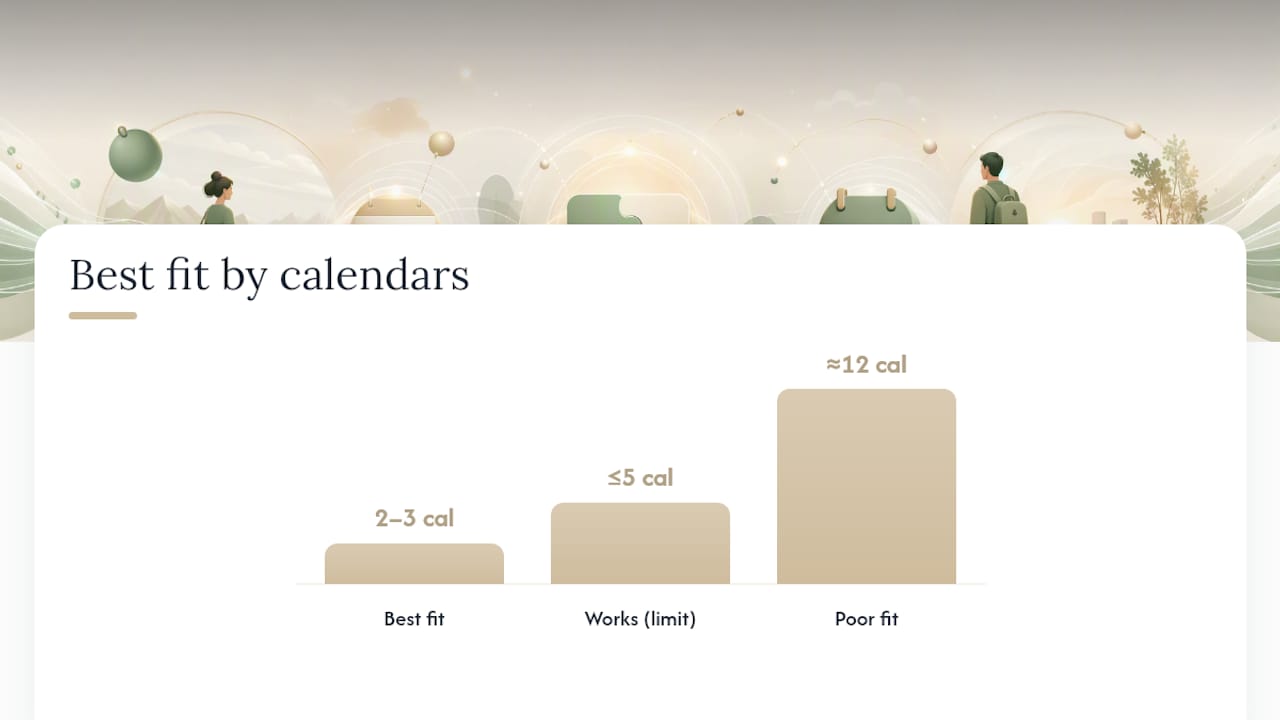
Here’s the catch nobody mentions upfront: this connection is a display layer, not a data pipeline. Notion’s own help documentation confirms that connected Google calendars show up as an overlay in Notion Calendar, but events never get imported into a Notion database as editable pages. You can look, but you can’t turn a Google event into a task with properties, and nothing you do in Notion pushes back to Google. Notion also notes that performance can degrade once you connect more than five calendars at once, so this works best for people managing two or three accounts, not a dozen.
Pro Tip: Use the native overlay for your own personal scheduling awareness, but don’t rely on it if your team needs to see Notion-tracked deadlines reflected as real Google Calendar events. For that, you’ll need the iCal or two-way methods below.
How Do You Publish Notion Events To Google Calendar?
Publishing works in one direction: from Notion outward. It’s the right call when you want a Notion database, say a content calendar or project timeline, to show up automatically in Google Calendar without manual re-entry.
- Build or open your Notion database and confirm it has a proper Date property.
- Use a service like Notion-to-Calendar to generate an iCal feed URL, or create a shareable calendar view in Notion if a direct export option is available.
- Copy that iCal URL.
- In Google Calendar, click the “+” next to “Other calendars,” then select “From URL.”
- Paste the feed link and click “Add Calendar.”
Google typically refreshes subscribed iCal feeds every few hours, not instantly, so don’t expect same-minute updates. And if your feed link is public rather than authenticated, anyone with the URL can see your event titles and dates, which matters if your Notion database tracks anything sensitive.
Pro Tip: If privacy is a concern, avoid public iCal links entirely and lean toward an authenticated service or a self-hosted script with proper token storage instead.
What Do Managed Two-Way Sync Tools Actually Do?
A managed integration is the only method on this list that lets a change in either app show up in the other, which is the whole point if you’re running tasks and meetings out of Notion but living in Google Calendar for scheduling.
The setup flow looks roughly the same across vendors: connect both accounts, select the Notion database and Google calendar you want linked, map fields (title, date, description, attendees), choose sync direction (one-way or two-way), and launch.
- Field mapping determines what data moves. Get this wrong and your calendar fills with blank or mismatched entries.
- Unito’s documentation notes a common limitation: only one Notion user per workspace can typically connect the integration, which matters for larger teams.
- 2sync’s docs describe sync intervals running every few minutes, with exact frequency varying by plan tier, plus support for fields like Meet links and attendees.
- Filters let you sync only specific views or statuses, so your whole database doesn’t flood the calendar.
- Recurring events are the weak spot industrywide. Most tools import them as individual instances rather than true recurrence patterns, so editing a series is often easier done directly in Google Calendar first.
Expect to pay a monthly fee for this tier of reliability, but for most teams it’s the lowest-maintenance path to genuine two-way sync.
Should You Build Your Own Notion Google Calendar Sync?
Open-source tools like notion-gcal-sync give you full control, at the cost of becoming your own IT department for this one workflow.
- Generate a Google
credentials.jsonfile through the Google Cloud Console. - Create a Notion internal integration token and share your database with it.
- Configure the script’s settings file, including timezone and sync interval.
- Run it locally or host it on a server, then monitor logs for errors.
Community documentation for these scripts flags real risks: recurring events can behave unpredictably, and syncing can overwrite event descriptions or links on subsequent runs if the config isn’t tuned carefully. Store your credentials file and Notion token somewhere encrypted, never in a public repository, and keep a backup of your Notion database export before your first sync run. This route makes sense mainly for developers comfortable debugging Python or Node scripts on a weekend, not for a team that just wants their calendar to work.
Why Isn’t My Notion Google Calendar Sync Working?
Most sync failures trace back to a handful of repeat offenders, and you can usually diagnose them in under ten minutes.
- Auth errors: Re-authorize the connection and check that OAuth scopes weren’t revoked, which commonly happens after a Google security review or password change.
- Missing events: Confirm which calendar is set as default in your integration settings, and check whether a filter is silently excluding certain statuses or views.
- Duplicate events: Inspect your filter and trigger rules. Deleting and recreating a Notion page often causes tools to treat it as a new event rather than an update.
- Delayed public iCal feeds: Google caches subscribed calendars for hours at a time. Removing and re-adding the feed URL can force an immediate refresh.
Pro Tip: When troubleshooting, isolate one event at a time. Duplicate a single Notion entry, watch how it behaves in Google Calendar, and you’ll usually spot the broken rule within a few sync cycles.
Which Sync Method Fits Your Team?
Match your actual need to the method, not the other way around.
- Need quick visibility only? Use the native overlay or a simple iCal feed.
- Publishing a schedule for others to subscribe to? iCal or a Notion-to-Calendar service.
- Need edits in either app to sync both ways? A managed integration.
- Want full control and custom automation logic? Go DIY.
Before paying for any vendor, ask directly: which fields do they map, how do they handle recurring events, how often does sync run, where is your data stored, and what’s the actual pricing tier once you’re past the free trial.
What I’ve Learned Running Calendar Sync in Real Workflows
Sync solves visibility, not accountability. I’ve watched operators build elaborate Notion databases with perfect Google Calendar mirrors, and the meetings still get missed because nobody’s tracking what was promised inside them. That’s the piece calendar tools were never built to handle. Some AI tools watch your calendar and email in one shared memory, so a commitment made on a call doesn’t vanish the moment the meeting ends.
— Eddie
A Different Way To Handle What Your Calendar Can’t Track
Notion and Google Calendar can share your schedule, but neither one remembers what you actually agreed to do after the meeting ends. That’s a different problem, and it’s the one Otto is built around.
Some AI chief of staff tools keep calendar, email, and meeting notes in a single memory, so a promise you made on a call gets logged and chased down automatically instead of getting buried under the next sync cycle. These tools draft follow-ups and reminders, but nothing goes out without your approval first. If your real bottleneck isn’t seeing your schedule but remembering what you owe people because of it, check out Otto and see whether it fits how you actually work.