 Otto
OttoTasks by Contact: 5 CRM Steps, Plus AI That Captures Meeting Context
Tasks by Contact: 5 CRM Steps, Plus AI That Captures Meeting Context

Tasks by contact means every to-do you create gets linked directly to the customer or lead to which it belongs, so you can create one, assign it, automate it, export it, or filter your contact list by it. The fastest path: open a contact record, choose Create Task, set the due date and assignee, and save the task. You will need edit customer tasks permission to create or edit these tasks.
TL;DR:
- Create tasks from the contact record to link them automatically, assign the task owner separately, and confirm you have permission to edit customer tasks.
- Use workflows for repeatable triggers such as new leads or stage changes, and map assignment to the contact owner rather than a fixed user.
- For exports, include contact or company identifiers, due dates, status, and assignee; use ISO date formatting and choose how tasks linked to multiple contacts become rows.
- Save shared views for open overdue tasks, upcoming due dates, and contacts without tasks, so the team can spot missed follow ups in one queue.
- Connect meeting notes and email to contact records, then review automatically drafted reminders and approve them before anything is sent.
Table of Contents
- Create and Assign Tasks to Contacts Manually
- Assign Tasks via Workflows and Automation
- Exporting Tasks with Related Contact and Company Fields
- Views, Filters, and Using Tasks as a Contact Manager
- How an AI Chief of Staff Captures Contact-Linked Tasks Automatically
- Syncing Tasks by Contact with Calendar and Meeting Notes
- Practitioner Perspective: Quick Patterns That Work
- Otto: A Practical Next Step to Stop Tasks by Contact from Slipping
- FAQ
- Sources
Create and Assign Tasks to Contacts Manually
Most CRMs give you two starting points for building a contact-linked task: the general Tasks area, where you create a task and then attach a contact, or the contact record itself, where the Create Task button already knows which contact you mean. Starting from the contact record is faster because the link is automatic.
- Open the contact record and click Create Task (or go to Tasks and select Create Task, then search for the contact).
- Set a clear title that states the next action, such as “Send renewal quote to Dana Price,” not a vague label like “Follow up.”
- Choose the due date and time, then pick the assignee: the person who will actually do the work.
- Confirm the contact link field is populated. HubSpot documents that you set “Assigned to” to Customer and select the contact in the Assigned Customer Contacts field, which is distinct from assigning a staff member to act on that contact.
- Save, and check that creating or editing the task did not get blocked by a missing permission.
Two assignment concepts get confused often: assigning a contact as the task’s subject versus assigning a user as the task’s owner. The subject is who the task is about. The owner is who clears it. Keep naming conventions consistent across your team, something like “[Action] + [Contact Name] + [Deadline],” so a shared queue stays scannable instead of becoming a wall of near-identical titles.
Assign Tasks via Workflows and Automation
Manual task creation works for one-off follow-ups, but repeatable moments deserve automation. Inside most workflow builders, you will find a Create Task action with an Assign Task To option that lets you route the task to a specific user, a role, or the contact’s owner automatically.
- Trigger on contact creation from an import, a form submission, or an API call, so every new lead gets a first-touch task without anyone remembering to add one.
- Trigger on property changes, such as a deal stage moving to “Proposal Sent,” to spawn a follow-up task at the right moment.
- Trigger on event-based actions, like a meeting being booked or canceled, to keep tasks synced with what is actually happening.
When building the action, pass real context into the task body, the contact’s name, company, and a short reason the task exists, so whoever picks it up does not need to reopen the full record. Workflow guidance on Create Task actions describes exactly where this field mapping option lives inside the action settings.
Pro Tip: If tasks keep landing on a default owner instead of the contact’s actual owner, check whether the workflow action is mapping “Assign Task To” to a static user instead of a dynamic property like Contact Owner.
Exporting Tasks with Related Contact and Company Fields
When you need a report or a backup of your task data, export from the Tasks list or a custom report view that includes contact and company columns, not just the task fields alone.
- Build or open a task report, then add columns for contact email or contact ID, company name or company ID, due date, status, and assignee.
- Export to CSV and check that date formats are consistent (ISO 8601, year-month-day, is the safest default for re-import).
- For tasks linked to multiple contacts, decide ahead of time whether you want one row per task or one row per contact-task pairing, since flattening multi-contact tasks incorrectly can duplicate or drop records.
- Before re-importing anywhere, confirm required columns are present and correctly typed. NetSuite’s import documentation warns that imports fail when required fields like Title, Status, Priority, Due Date, and Assignee are missing or formatted incorrectly, and recommends mapping Assignee and Due Date explicitly rather than relying on defaults.
A stable identifier, contact email or internal contact ID, travels better through exports and re-imports than a display name, which can change or collide across records.
Views, Filters, and Using Tasks as a Contact Manager
A well-built filter turns your task list into a live contact manager. Instead of scrolling every record, you filter the contact list or task list by status, due date, or assignee, and the right people surface automatically.
- Build a saved view for “overdue follow-ups”: task status is open and due date is before today.
- Build a second view for “contacts due this week” so reps know what is coming before it becomes overdue.
- Build a third for “contacts without tasks,” which often surfaces leads that quietly fell out of your process.
- Share these as URL-based or team-visible saved views so everyone works from the same queue instead of personal filters that drift apart.
Pairing these views with task notes and an interaction timeline on each contact keeps the full context attached: what was promised, when, and by whom, rather than scattered across separate tools.
How an AI Chief of Staff Captures Contact-Linked Tasks Automatically
Most task slippage happens in the gap between a meeting or email and the moment someone remembers to open the CRM and create a task. An AI chief of staff closes that gap by holding meetings, email, and calendar in one shared memory, so a promise made out loud on a call becomes a contact-linked task without anyone retyping it.
Such a platform can pull from the meeting transcript, the related email thread, and the calendar event to populate the task with the actual commitment, who it is for, and why. Follow-ups and next rechecks are drafted for your approval rather than sending anything automatically, so the contact’s context stays intact and nothing goes out without a human decision.
Pro Tip: After a client call, check for a drafted follow-up task tied to that contact before manually writing one. If it already captured the commitment, you just saved the step most people forget.

Syncing Tasks by Contact with Calendar and Meeting Notes
Tasks that live apart from your calendar and meeting notes lose context fast. The fix is treating the meeting as the source event and the task as its output, linked back to both the contact and the calendar entry that produced it.
Start by connecting your calendar to your CRM or task tool so that meetings tied to a contact appear directly on that contact’s record. When a meeting ends, the notes or transcript should attach to the same contact, and any action items from that meeting should generate tasks referencing the meeting date, not just a generic creation date. This matters because a task dated to when it was typed, rather than when the commitment was made, misleads anyone reviewing the contact’s history later.
Where your tools support it, set the task’s due date relative to the meeting or the next scheduled touchpoint with that contact, rather than a fixed number of days out. A renewal conversation scheduled for next quarter should generate a recheck task tied to that date, not an arbitrary 30-day reminder that arrives before anyone is ready to act. Developer CRM scheduling patterns describe keeping a stated reason attached to each scheduled recheck, since a recheck with no reason attached tends to lose priority and get snoozed indefinitely.

Personal CRM tools follow a similar logic: Arcadia Connect’s interaction logging approach ties follow-up reminders and AI-suggested next actions to a contact’s history, which keeps due tasks visible in context instead of buried in a separate list disconnected from the notes that explain them.
Practitioner Perspective: Quick Patterns That Work
Pick a consistent naming convention for “next action” tasks and enforce it everywhere to keep the task queue easily scannable. Automate the obvious, repeatable task creation, but keep external-facing drafts human-approved before anything sends. Saved, shared views beat personal filters because they give the whole team one worklist instead of five versions of the truth.
— Eddie
Otto: A Practical Next Step to Stop Tasks by Contact from Slipping
The steps above work in any CRM, but they still depend on someone remembering to open a record after a call and manually tie the commitment to the right contact. We built Otto to remove that step entirely: it listens in meetings, reads your email and calendar, and keeps one shared memory of every promise made, so contact-linked tasks draft themselves instead of waiting on you to type them.
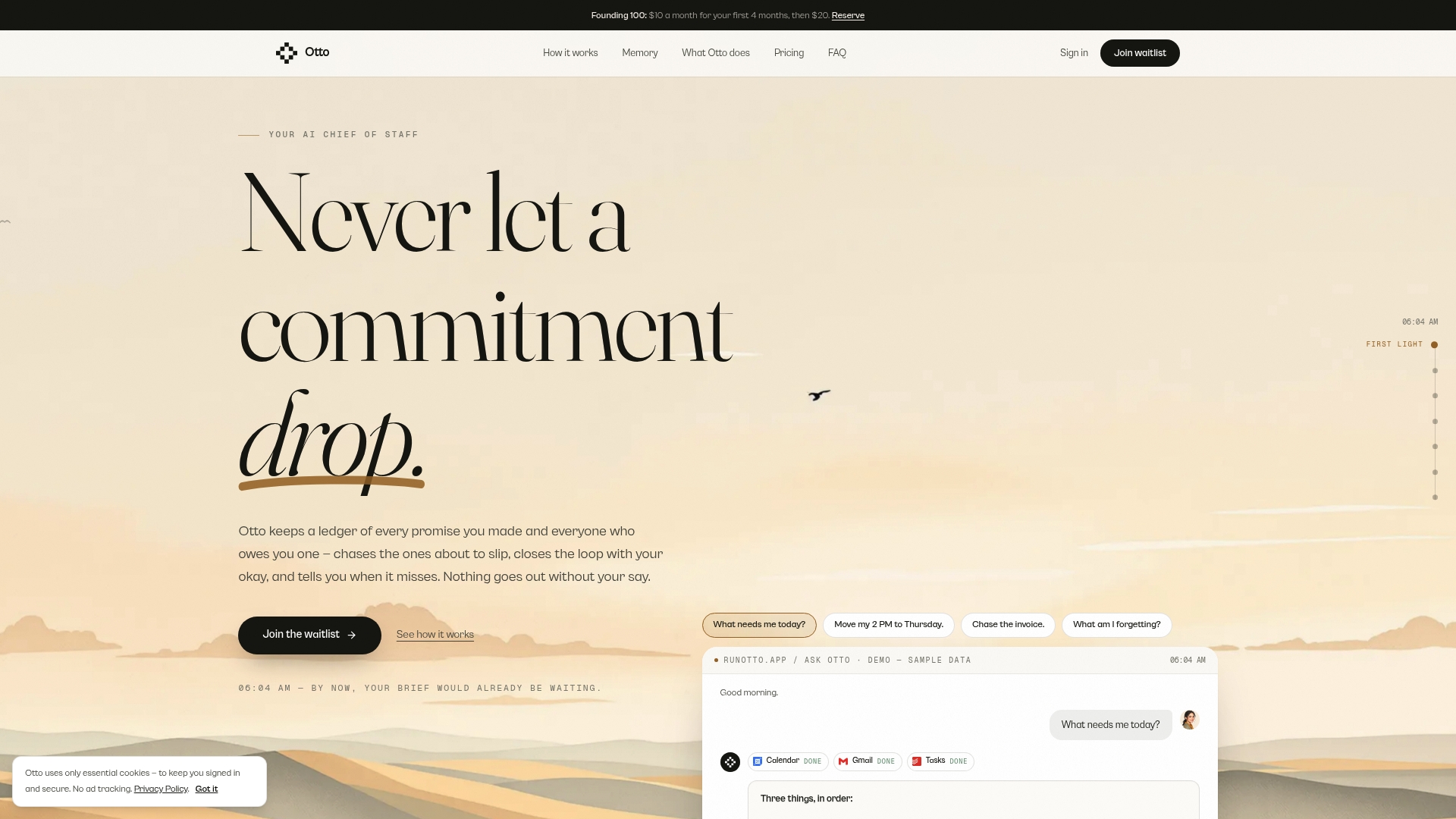
- Commitments from calls and email can be captured and attached to the right contact automatically.
- Follow-up and next recheck drafts require your approval before sending.
- Integration with tools like Gmail, Google Calendar, Slack, Notion, GitHub, and Todoist allows context to travel with you.
If you want to see what that looks like after a real meeting, our post-meeting follow-up workflow walks through a full example. To try it on your own contacts, start with the Free plan at Otto, or upgrade for higher usage limits as your task volume grows.
FAQ
How can I keep track of my work tasks?
The most reliable method links every task to the contact, deal, or project it belongs to and reviews a saved filtered view daily rather than a long unsorted list. Tools that connect your calendar and email to your task list, so commitments generate tasks automatically, reduce how much you have to track by memory.
Which is correct: “task” or “tasks”?
“Task” is singular, referring to one to-do item, while “tasks” is plural for more than one. In CRM contexts you will see both: a single task assigned to a contact, or a contact’s full list of tasks.
What is the best way to organize my contacts?
Group contacts by status or stage, then attach any open tasks directly to each record so the next action is visible without searching. Saved filtered views, such as contacts without a task or contacts overdue for follow-up, keep that organization visible to the whole team rather than locked in one person’s head.
How do I add an email to a task list?
Most CRMs let you link an email thread directly to a contact or create a task from within the email itself, which keeps the message attached as context. Where your tools connect email and tasks automatically, a relevant email thread can populate the task description so the assignee does not need to search their inbox separately.