 Otto
OttoKeep in Touch Reminders for Founders: One Memory, Human Review
Keep in Touch Reminders for Founders: One Memory, Human Review

Keep-in-touch reminders are AI-drafted follow-up prompts that link your email, calendar, and meeting commitments so a promise made on a call or buried in a thread never gets lost. The approach that works best keeps a human in charge: the AI drafts the reminder, and you approve it before anything sends. That single rule is what separates a useful system from one more inbox to babysit.
TL;DR:
- The system should capture commitments from meeting transcripts, email threads, and calendar notes, then record who owes what to whom in a shared ledger.
- Review drafts for same day replies immediately, batch routine relationship reminders into a daily digest, and resurface unapproved drafts after their proposed send window.
- Before connecting email or calendars, restrict external sharing, audit OAuth consent scopes, grant least privilege, and check tenant settings with CISA’s SCuBA tools.
- Pilot the workflow with two to four recurring relationships for two weeks, then count follow ups that would otherwise have slipped before expanding.
- Check each proposed send time against the recipient’s timezone, particularly when contacts live in different regions, before approving any reminder draft.
Table of Contents
- How keep-in-touch reminders actually work
- Why this matters for busy professionals
- Building an approval-first workflow that doesn’t create friction
- Security checks before you connect email and calendar
- A one-afternoon checklist to start safely
- Customization options for reminder frequency and content personalization
- Integration with CRM systems and contact management tools
- Handling recurring reminders and long-term relationship nurturing
- Examples of best practices for keep-in-touch messages
- Analytics and reporting on reminder engagement
- What a human-in-the-loop system gets right
- Try keep-in-touch reminders built on one shared memory
- FAQ
- Sources
How keep-in-touch reminders actually work
A reminder system worth using has to see more than your inbox. It needs to pull from meeting transcripts, email threads, calendar event notes, and whatever context you have on a contact, because a promise rarely lives in just one of those places. Someone says “I’ll send that deck by Friday” on a call, and unless that sentence gets captured the moment it’s spoken, it’s gone by the time the meeting ends.
The mechanics break down into a few steps:
- The system scans meetings, email, and calendar events for commitments, explicit or implied.
- Each detected promise gets assigned to a shared ledger, tagged with who owes what to whom.
- A draft reminder gets generated, with suggested timing and the right recipient already filled in.
- Nothing sends until you approve it, whether that’s a one-tap yes or a quick edit first.
A typical sequence looks like this:
- You tell an investor on a Tuesday call you’ll follow up with updated metrics.
- The system flags that line in the transcript and creates a ledger entry.
- A draft reminder appears in your queue the next morning with the context snippet attached.
- You approve it as written, or tweak the wording, and it goes out or gets scheduled.
Some people want every draft reviewed the moment it’s ready. Others prefer a daily digest, one batch to clear each morning instead of a trickle of notifications all day.
Pro Tip: Keep context snippets short in your drafts. A single line from the transcript is usually enough to jog your memory without forcing you to reread the whole meeting.
Why this matters for busy professionals
The real cost of fragmented tools isn’t the tools themselves, it’s the mental tax of remembering what you promised, to whom, and when. Founders and operators running a dozen relationships across email, Slack, and calendar invites end up holding all the connective tissue in their own head. That’s expensive, and it’s exactly where things slip.
A few recurring situations show where this pays off:
- Investor updates that need to go out on a predictable cadence without becoming an afterthought.
- Client commitments made mid-call that would otherwise live only in someone’s memory.
- Recurring check-ins with advisors, partners, or key hires that quietly matter but never feel urgent enough to schedule.
None of this requires more hours in the day. It requires fewer things falling through the cracks, which is a different problem with a different fix. For more on why reminders and tasks deserve separate handling, see how AI chiefs of staff catch promises differently than a standard to-do list.
Building an approval-first workflow that doesn’t create friction
The approval gate is the part people worry will slow them down. Done right, it adds seconds, not minutes.
- Set trigger rules: an explicit promise (“I’ll send this by Thursday”), a transcript-detected action item, or a flagged email thread should all generate a draft.
- Decide who reviews. A single-owner model works for most founders; chiefs of staff often set up a delegate pattern where they clear routine approvals and escalate only the sensitive ones.
- Choose a cadence. Time-sensitive items (same-day replies) deserve immediate review; relationship maintenance (quarterly check-ins) fits a daily digest.
- Set a fallback. If a draft sits unapproved past its proposed send window, it should resurface at the top of the next digest rather than quietly expire.
- Make sure every draft carries enough metadata to approve fast: a context snippet, the meeting link if relevant, and a proposed send time.
The human-in-the-loop principle exists because tone matters. A reminder worded slightly wrong, or sent at the wrong time for someone in another timezone, can cost more goodwill than the missed follow-up would have.
Pro Tip: Always confirm proposed send times against the recipient’s timezone before approving, especially for cross-region relationships where a “morning” email can land at midnight.
Security checks before you connect email and calendar
Before any reminder system touches your inbox or calendar, the integration itself needs a security review, not an afterthought bolted on later. The Secure Cloud Business Applications project from CISA offers configuration baselines and assessment tools, including ScubaGear and ScubaGoggles, built specifically to evaluate Microsoft 365 and Google Workspace tenant settings against known risks.
A short checklist worth running before granting access:
- Restrict external calendar sharing so event details don’t leak beyond your organization by default, a control Google Workspace’s own security guidance recommends for medium and large businesses.
- Audit OAuth consent scopes for any new integration, granting only what the tool actually needs.
- Enable impersonation protection and email authentication, following the practices laid out in the Exchange Online Secure Configuration Baseline, which details mailbox protections designed to cut down on spoofing and phishing.
- Turn on admin alerts and revisit your tenant configuration periodically rather than setting it once and forgetting it.
CISA’s SCuBA project provides configuration baselines and tools administrators can run against their own tenant to catch gaps before they become incidents, as detailed in its resource library. That kind of periodic check matters more as you connect more of your communication layer to an automated system.
A one-afternoon checklist to start safely
You don’t need a multi-week rollout to pilot this. A focused afternoon gets you most of the way there.
- Connect your email and calendar using the least-privilege scopes the integration offers, nothing broader than necessary.
- Turn on meeting transcription and set your promise-detection rules, starting narrow rather than catching everything.
- Set your approval preferences: immediate review for urgent items, a daily digest for everything else.
- Run the admin security checks from the previous section: calendar sharing restrictions, impersonation protections, consent scope audits.
- Pick two to four recurring relationships, an investor, a key client, a standing advisor call, and run a two-week pilot before expanding further.
Track one thing during the pilot: how many follow-ups would have slipped without it. That number tells you more than any feature list.
Pro Tip: Start with relationships you already check in with regularly. A pilot built on brand-new contacts makes it harder to tell whether the system caught something you’d have remembered anyway.
Templates help here too. The post-meeting follow-up guide walks through wording patterns worth testing during your first two weeks.
Customization options for reminder frequency and content personalization
Not every relationship needs the same cadence, and a system that treats a weekly client call the same as a once-a-year advisor check-in will annoy you fast. Frequency settings typically range from immediate (send the moment a promise is detected) to weekly or monthly digests for lower-urgency relationships.
Content personalization matters just as much as timing. A draft reminder pulled straight from a meeting transcript reads differently than one written for a cold outreach follow-up, and the tone should reflect that. Adjustable elements worth setting per relationship or per category include:
- How much context the draft includes, a full transcript excerpt versus a one-line summary.
- Default greeting and sign-off style, matched to how formally you’d normally write to that contact.
- Whether a reminder suggests a specific next step (schedule a call) or simply flags that contact is due for an update.
The goal is a draft that reads like something you’d have written yourself, just faster. The less editing a draft needs before approval, the more the system actually saves you.
Integration with CRM systems and contact management tools
A reminder system that lives entirely separate from your contact records creates the exact fragmentation problem it’s supposed to solve. If your CRM holds deal stages and relationship history but your reminders live somewhere else, you’re back to manually syncing context between tools, which is the job this whole category exists to remove.
The practical fix is integration depth: a reminder tied to a contact should be able to pull basic relationship context (last interaction, deal stage, notes) and push updates back the other way (a follow-up sent, a reply received) so your CRM stays current without manual entry. Otto connects with over 130 tools including Gmail, Google Calendar, Slack, Notion, GitHub, and Todoist, so reminders and commitments tracked in one place reflect what’s actually in your other systems rather than living in a silo.

For a solo founder, this might mean a lightweight contact list. For a chief of staff managing a founder’s external relationships across dozens of stakeholders, it means the reminder system and the CRM need to agree on who’s been contacted and when, without someone manually reconciling the two every week.
Handling recurring reminders and long-term relationship nurturing
Not every important relationship needs weekly contact, but most benefit from a cadence you’ve actually set on purpose rather than one that happens by accident. Recurring reminders work best when they’re tied to a reason, a quarterly investor update, a standing check-in with a key advisor, a seasonal touch with a long-standing client, rather than an arbitrary interval.
A few patterns worth setting up deliberately:
- Quarterly or monthly cadences for relationships that matter but don’t generate natural touchpoints on their own.
- Trigger-based reminders tied to events (a contact’s work anniversary, a contract renewal date) rather than a flat calendar interval.
- Decay rules that surface a contact automatically once too much time has passed since the last interaction, even without a scheduled trigger.
The steps for scheduling recurring check-ins across major calendar platforms cover the mechanics of setting these cadences up without them turning into noise. The aim is a system that nudges you toward relationships worth maintaining, not one that nags you about every contact equally.
Examples of best practices for keep-in-touch messages
A good keep-in-touch message is short, specific, and gives the recipient an easy way to respond. Vague check-ins (“just wanted to touch base”) tend to get ignored because they ask the reader to do the work of figuring out why you’re writing.
A few patterns that tend to perform better:
- Reference something specific from the last interaction rather than opening cold, “Following up on the metrics you asked about last Tuesday” beats “Checking in.”
- Give the recipient a clear, low-effort next step, a yes/no question or a specific time suggestion rather than an open-ended “let’s catch up soon.”
- Keep it to a few sentences. Long keep-in-touch emails read like they’re trying to justify the interruption.
The follow-up templates and AI workflow guide covers wording for common scenarios, from investor updates to client check-ins, that you can adapt rather than writing from scratch every time. Reviewing a draft against a template before approving it is often faster than writing the message cold.
Analytics and reporting on reminder engagement
Once reminders are running, the useful question shifts from “is this working” to “how well.” Basic engagement metrics worth tracking include how many drafted reminders get approved versus edited heavily, how many get replies, and how many commitments close out versus drift past their original deadline.
That data matters most when it points at a specific fix. A high edit rate on drafts for a particular type of message suggests the template or tone needs adjusting. A pattern of commitments slipping past their deadline for a specific relationship category might mean the cadence is wrong, not the content.
Reporting doesn’t need to be elaborate to be useful. A simple weekly view of open commitments, approved versus pending reminders, and response rates gives enough signal to adjust your approval rules or detection sensitivity without turning relationship management into a spreadsheet exercise.
What a human-in-the-loop system gets right
The strongest argument for keeping a person in the approval seat isn’t caution, it’s accuracy. A system that can see your inbox, your calendar, and your meeting transcripts all at once catches things a single-purpose tool never will, because the promise you made out loud on a call rarely gets logged anywhere an email-only assistant can see.
But seeing everything doesn’t mean sending everything automatically. Tone matters in professional relationships in ways that are hard to encode into rules, and a single oddly worded or badly timed message can undo more goodwill than a missed follow-up ever would. The draft-then-approve pattern exists because it catches those errors before they leave your outbox, not because the detection itself is unreliable. For more on how this plays out in practice, the post on stopping missed follow-ups walks through the ledger-and-approval pattern in more depth.
— Eddie
Try keep-in-touch reminders built on one shared memory
We built our AI chief of staff around a simple idea: your email, calendar, and meetings should live in one shared memory instead of three disconnected tools you have to manually reconcile. Every promise made on a call or buried in a thread lands in a single ledger that the system chases until it’s closed, and nothing goes out without your explicit approval first.
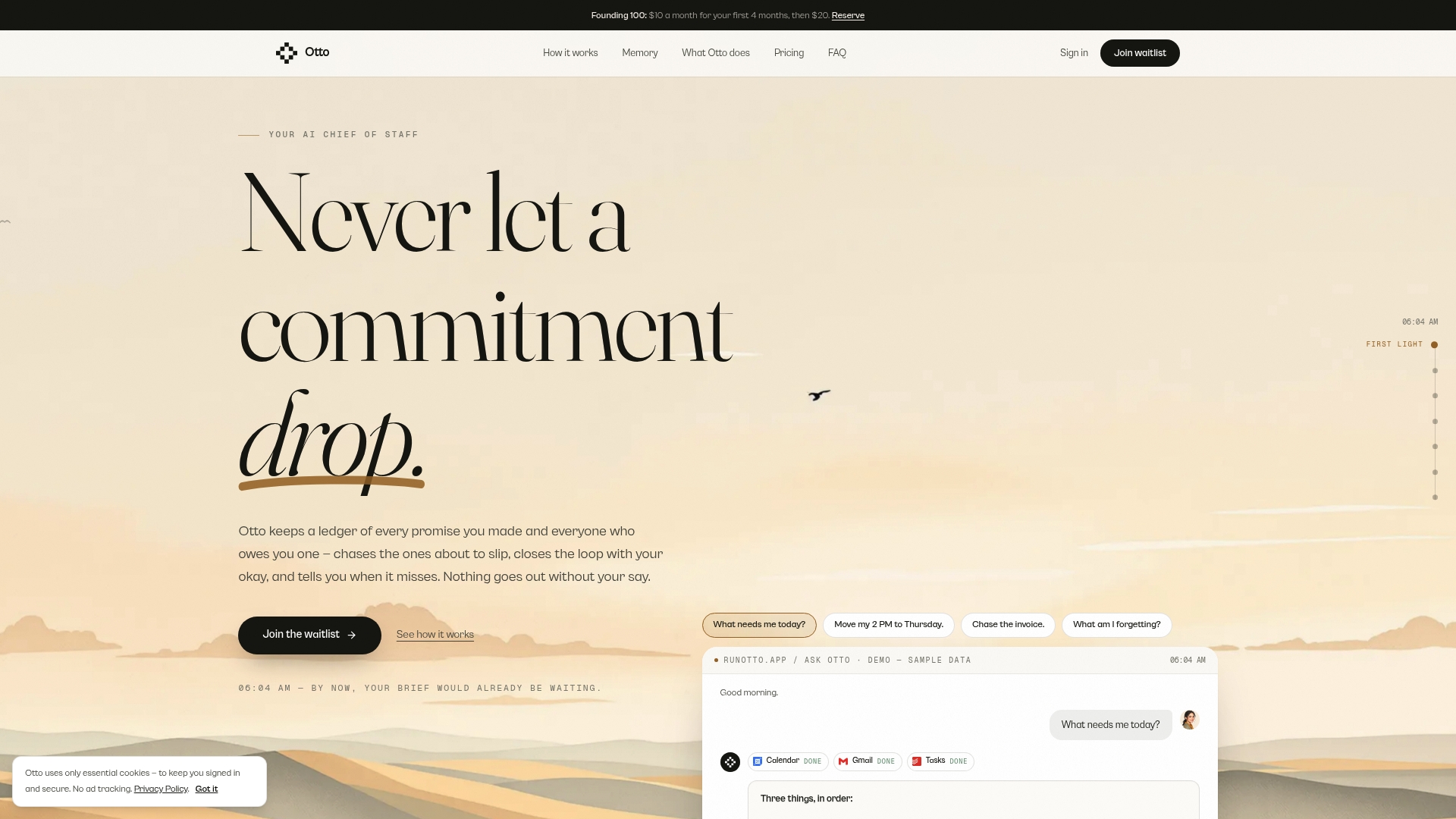
That approach shows up in a few concrete ways:
- Keep-in-touch reminders are drafted from meeting transcripts and email context, not just a calendar nudge.
- Commitments are flagged the moment they’re made, so nothing depends on you remembering to write it down.
- Users get one-tap approval or a quick edit option before anything sends.
For an inbox-first version of this pattern, the consequence-first email triage approach from theNeedle covers a related angle worth knowing about. We take a broader view, tying what’s in your inbox to what happened in your last meeting.
Our plans start at Free, with Upgraded at $20 a month and Max at $50 a month. Start on the free plan and see what a shared memory across email, calendar, and meetings catches in your first week.
FAQ
What are keep-in-touch reminders in a professional context?
Keep-in-touch reminders are AI-drafted prompts that track commitments made across email, calendar, and meetings, then surface a reminder before a promise gets missed. The strongest versions require your approval before anything sends, keeping you in control of tone and timing.
How does an approval gate work for automated reminders?
An approval gate means the system drafts a reminder but waits for a human to approve, edit, or reject it before it sends or schedules. This is widely recommended because it prevents tone errors and accidental sends, as outlined in guidance on human-in-the-loop approval workflows.
Are there security risks when connecting email and calendar to a reminder tool?
Any integration that touches email and calendar should be checked against tenant security settings first, including OAuth consent scopes and external calendar sharing rules. CISA’s SCuBA project provides baselines and tools specifically built to assess these configurations before you connect a new service.
Can keep-in-touch reminders work with my existing CRM?
Yes, when the reminder system integrates with your contact and deal records rather than operating in isolation. Otto connects with over 130 tools, including common CRM and productivity platforms, so reminders reflect the same contact context your team already relies on.
How much does a keep-in-touch reminder tool like Otto cost?
Otto offers a Free plan, an Upgraded plan at $20 a month, and a Max plan at $50 a month, each with different usage limits and features. Full details are available on the Otto plans page.
Sources
- Security checklist for medium and large businesses | Google Workspace Help
- Secure Cloud Business Applications (SCuBA) Project | CISA
- All about Approval workflows | Microsoft Support